Plastic-coated pipes are a type of composite pipe that has a high molecular anti-corrosion coating applied to both the inner and outer walls of the pipe. They combine the mechanical strength of steel pipes with the corrosion resistance of plastics, and are widely used in municipal water supply and drainage, fire protection, chemical industries, etc.
The core of plastic-coated pipes lies in their coating. Currently, the main coating materials are epoxy resin (EP) and polyethylene (PE). Epoxy resin coatings have extremely strong adhesion and are non-toxic and hygienic, usually in red or gray colors, and are mainly used for transporting drinking water, fire protection water, and chemical fluids. Polyethylene coatings are more resilient and wear-resistant, with a black appearance, and are particularly suitable for buried long-distance pipeline lines and cable conduit pipes in environments demanding high resistance to mechanical damage.
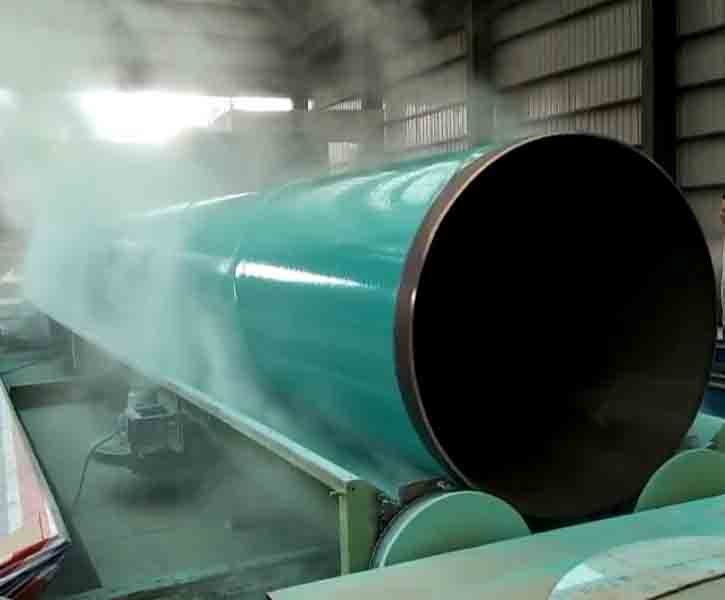
The quality of the coating directly determines the service life of the pipe. A qualified plastic-coated pipe must pass three key tests: First, the coating thickness must comply with national standards, and there are strict corresponding thickness requirements for different pipe diameters; second, the adhesion must be firm, and the coating cannot be easily peeled off from the pipe surface; third, before leaving the factory, 100% electrospark pinhole detection must be carried out. If there is any invisible tiny damage to the naked eye, the instrument will alarm, and the product will be judged as unqualified.
It is precisely with this reliable "plastic armor" that plastic-coated pipes achieve long-term protection of "no scaling on the inner wall and no corrosion on the outer wall", becoming an indispensable "invisible guardian" in modern urban water networks and industrial pipeline systems.

No.1 Haodeboer Road, Qingdao, Shandong, China
Please fill in your information and let us get in touch with you.


 English
 简体中文
简体中文
 Français
 Español
 Árabe
Árabe
 Prancis
 한국어
한국어
 Русский
 Português
 Deutsch
 日本語
日本語
 हिंदी
हिंदी
 Türkçe
 Tiếng Việt
 Italiano
 ไทย
ไทย
